
How Often Should Parking Lots Be Swept?
July 10, 2026
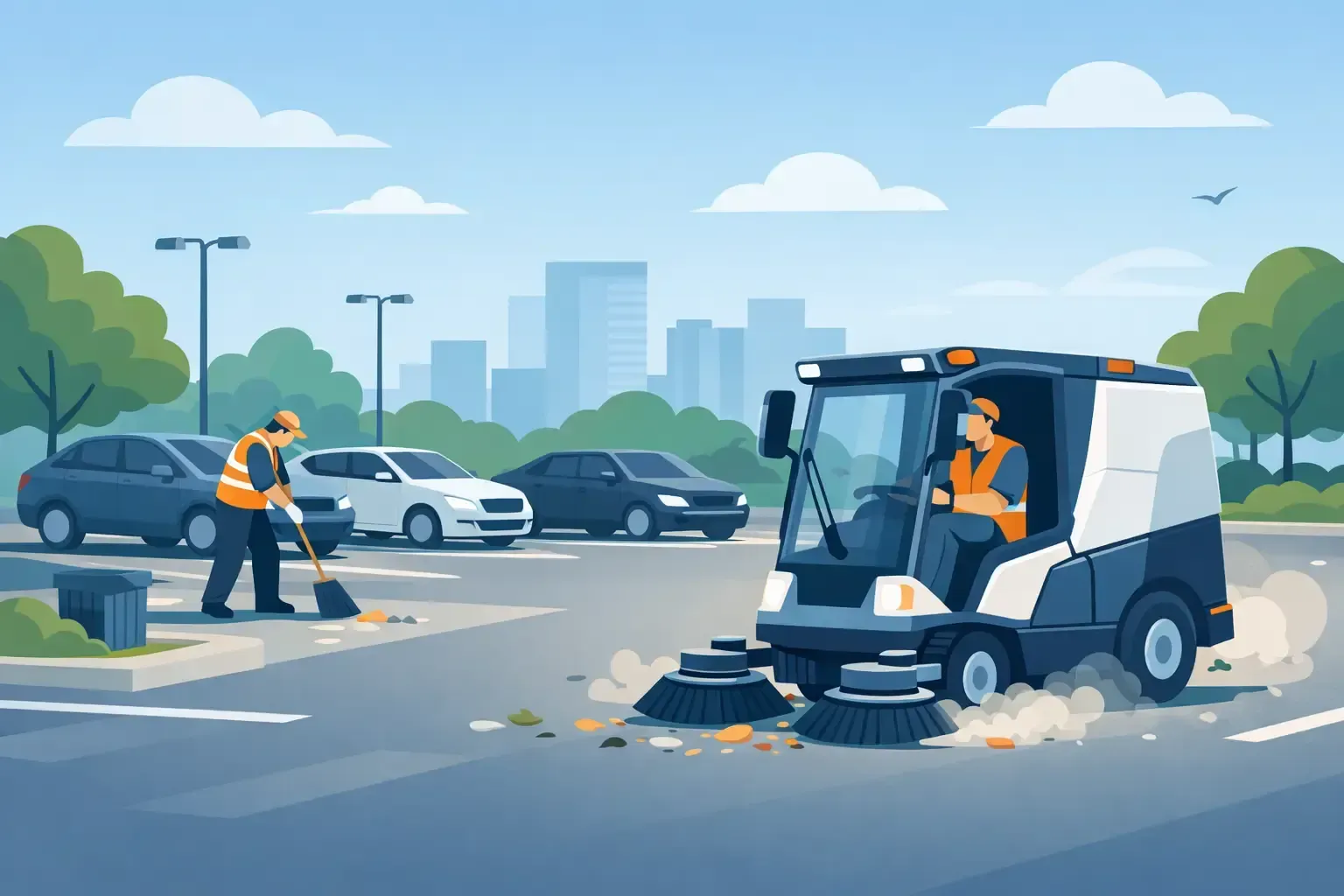
A parking lot tells people what to expect before they ever walk through your door. If customers pull in and see trash in the corners, leaves around the curbs, and grit collecting at the entrances, they notice. That is why property managers and business owners often ask how often should parking lots be swept, and the honest answer is this: it depends on traffic, property type, and how clean you need the site to look every day.
For most commercial properties, sweeping should be routine, not occasional. Waiting until the lot looks bad usually means debris has already built up, curb appeal has dropped, and small hazards have had time to become bigger problems. A consistent schedule keeps the property looking cared for and helps prevent dirt, trash, and loose debris from getting out of hand.
How often should parking lots be swept for most properties?
A good starting point is weekly sweeping for many commercial lots. That works well for properties with moderate traffic, typical customer turnover, and average debris levels. It keeps litter from collecting, reduces dust and dirt buildup, and helps the lot stay presentable without long gaps between service visits.
But weekly service is not right for every site. Some lots need attention several times a week, while others can stay in good shape with twice-monthly or monthly sweeping. The right frequency comes down to how the property is used and what the lot faces from day to day.
Retail centers, restaurants, gas stations, medical offices, apartment communities, office parks, and industrial properties all create different amounts of debris. A shopping center with constant customer traffic and food-related trash usually needs more frequent sweeping than a small professional office with limited daily activity. The more vehicles, foot traffic, and turnover you have, the faster debris builds up.
The main factors that determine sweeping frequency
If you are trying to set the right schedule, start with traffic. High-traffic lots collect more trash, dirt, cigarette butts, packaging, and gravel. Cars track in debris, customers leave behind litter, and wind moves everything toward curbs, medians, and drainage areas. A busy property can go from clean to messy in a matter of days.
Property type matters just as much. Retail and restaurant lots usually need more frequent sweeping because appearance directly affects customer perception. Medical buildings and professional offices may not generate the same kind of litter, but they still need a clean, safe exterior that reflects well on the business. Industrial sites often deal with heavier debris, dust, or material tracked by trucks, which can call for a different maintenance rhythm.
The layout of the site also plays a role. Lots with islands, curbs, loading areas, dumpster enclosures, and hard-to-reach corners collect debris faster than wide-open layouts. If your property has several areas where litter tends to get trapped, sweeping may need to happen more often to keep the entire site under control.
Seasonal conditions in Central Florida can change the schedule too. Rain, wind, storm debris, and leaf drop all affect how quickly a lot gets dirty. During wetter months, debris can wash into drains and collect along curbs. After storms, branches, leaves, and trash can make a property look neglected almost overnight.
Recommended sweeping schedules by property type
For many office buildings and lower-traffic commercial properties, every two weeks may be enough if the lot stays relatively clean between visits. This works best when there is limited customer turnover, no major litter sources, and staff who keep an eye on obvious trash during the week.
Weekly sweeping is often the sweet spot for general commercial properties. It is frequent enough to maintain curb appeal, manage loose debris, and prevent buildup in corners and along sidewalks. For many property managers, this schedule gives them a dependable baseline without over-servicing the site.
Two to three times per week is common for busier retail sites, restaurants, convenience stores, and shopping centers. These properties tend to generate more litter, and customers notice exterior cleanliness right away. If people are visiting your business every day, the lot should not look like it gets cleaned only once in a while.
Nightly or near-daily sweeping can make sense for high-volume sites with heavy traffic, shared commercial centers, or properties that need to meet strict appearance standards. This is especially true when lots serve businesses that open early, close late, or rely on a polished customer experience.
Industrial and warehouse properties are a little different. They may not need the same kind of front-facing appearance as a retail plaza, but they often require regular sweeping for safety and dust control. The right schedule depends on truck traffic, loose material, and the amount of debris generated by operations.
Signs your lot needs more frequent sweeping
If you are unsure whether your current schedule is enough, your lot usually gives you the answer. When debris is visible before the next scheduled service, the interval is too long. A clean lot should still look maintained throughout the service cycle, not just for a day or two after it is swept.
One obvious sign is trash collecting along curbs, islands, and fence lines. Another is dirt and grit building up near entrances, parking stalls, or loading zones. If drains are collecting leaves and litter, that is a warning sign too. It means debris is not being removed often enough and may start causing water flow problems.
You should also pay attention to customer-facing areas. If the front of the property regularly looks worn down, dusty, or neglected, your sweeping schedule may not match your business needs. For customer-facing businesses, appearance is part of operations, not an extra.
Why too little sweeping costs more over time
Some properties try to save money by stretching out service visits. On paper, that can look efficient. In practice, it often leads to more cleanup, more visible wear, and more reactive maintenance later.
Debris that sits too long gets ground into surfaces by traffic. Dust and dirt spread beyond the lot and onto sidewalks and entry areas. Trash blows into landscaping, around storefronts, and toward neighboring spaces. What could have been handled with routine sweeping starts turning into a larger cleanup issue.
There is also the safety side. Loose gravel, broken glass, metal fragments, and storm debris can create risks for both vehicles and pedestrians. A neglected lot does not just look bad. It can become a liability.
How to choose the right schedule for your property
The best approach is to match your sweeping frequency to the way the property actually performs week to week. Start by looking at traffic volume, tenant mix, lot size, and how quickly debris becomes visible. Think about when your property needs to look its best, whether that is every morning, before business hours, or after peak customer traffic.
It also helps to think beyond sweeping alone. Some sites benefit from combining parking lot sweeping with porter services, power washing, or exterior cleanup. If litter around entrances, sidewalks, or dumpster areas is part of the problem, the right maintenance plan may involve more than one service.
For commercial properties in Bartow, Lakeland, and surrounding areas, scheduling flexibility matters. A sweeping crew that can work overnight, early morning, or after business hours makes it easier to keep the property clean without disrupting tenants, employees, or customers. That kind of consistency is especially valuable for businesses that cannot afford to have maintenance happening during peak hours.
How often should parking lots be swept in Florida conditions?
In Central Florida, many lots need more frequent attention than owners first expect. Wind, rain, landscaping debris, and steady traffic can make a property look rough fast. Even a well-maintained site can collect leaves, sand, and litter along edges and drains between visits.
That is why many local commercial properties do best with at least weekly service, and busy sites often need more. The goal is not simply to remove what is already visible. It is to stay ahead of buildup so the property remains clean, safe, and professional all week long.
A dependable sweeping schedule keeps the lot from becoming one more problem on your list. If your property always seems to need attention sooner than expected, that is usually a sign the schedule needs to change, not that you should wait longer. Clean lots are easier to maintain when the work is done consistently, by a crew that shows up when they say they will and handles the job thoroughly.