
HOA Common Area Cleaning That Holds Up
July 6, 2026
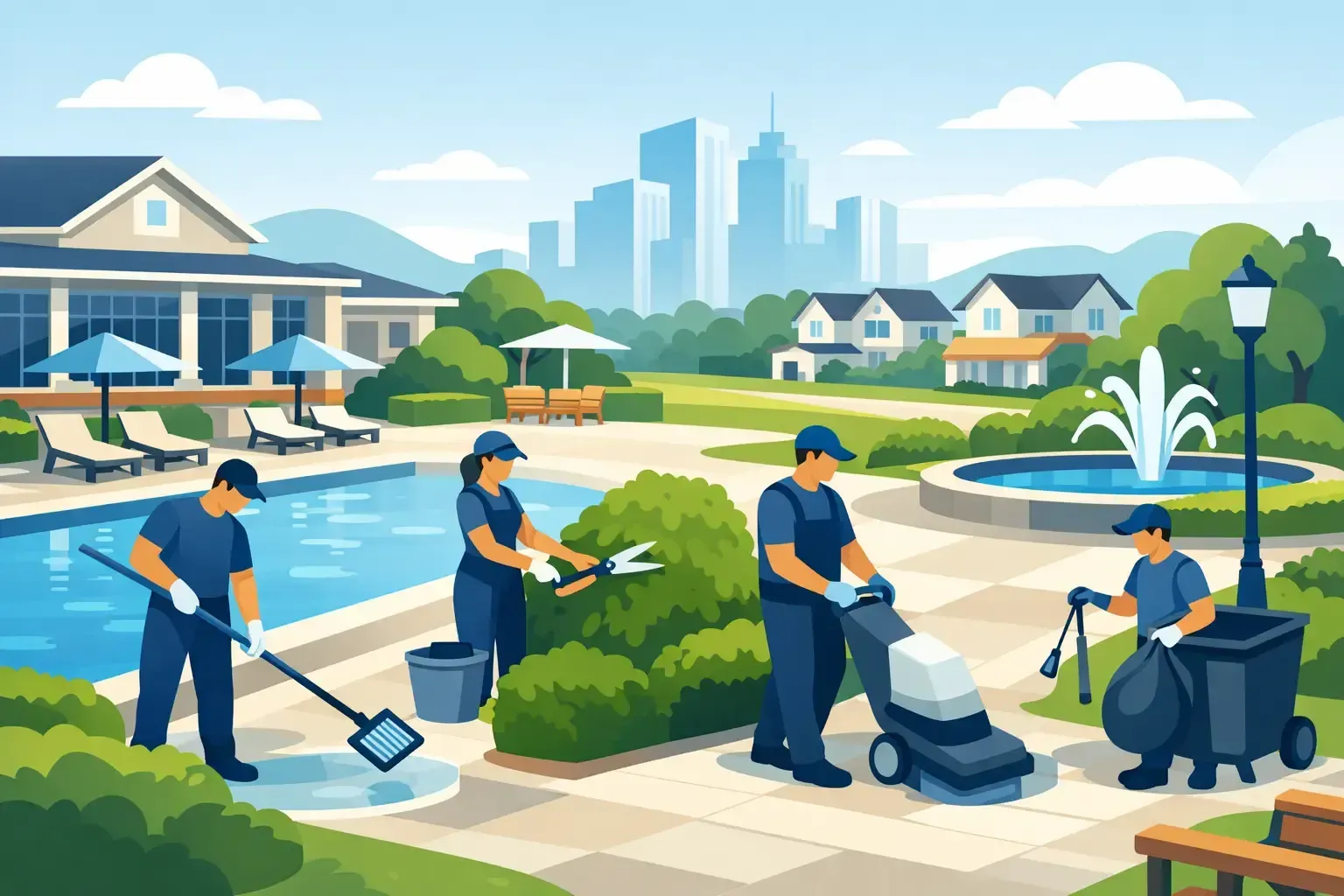
A messy entrance, stained sidewalks, and debris in the parking area send a message before anyone says a word. For HOA boards and property managers, that message matters. HOA common area cleaning is not just about appearance. It affects safety, resident satisfaction, and how well the property holds its value over time.
Shared spaces take a beating in Florida. Wind pushes litter into curbs and corners. Rain moves dirt and organic buildup across walkways and parking areas. Trees drop leaves, seed pods, and branches where residents walk, park, and gather. If those areas are not cleaned on a steady schedule, small issues turn into complaints, slip hazards, and a property that starts to look neglected.
Why HOA common area cleaning matters more than it seems
Residents notice common areas every day, even if they do not say much about them until something goes wrong. They see the condition of the entry drives, sidewalks, curbs, dumpster pads, mailbox areas, and parking lots. Visitors notice them too. Clean exterior spaces make a community feel cared for. Dirty ones make people wonder what else is being overlooked.
There is also the practical side. Leaves, trash, gravel, and other debris create hazards for both pedestrians and vehicles. Oil spots and grime build up on concrete and asphalt. Overflow around trash enclosures attracts pests and adds odor. When routine cleaning is delayed too long, the work usually becomes more expensive and more disruptive.
That is why many associations treat exterior cleaning as ongoing maintenance instead of a once-in-a-while fix. A regular schedule keeps the property looking steady, not up and down.
What falls under HOA common area cleaning
Every community is a little different, but most HOAs have the same pressure points. Parking lots and private roads need sweeping to remove litter, sand, leaves, and loose debris. Sidewalks, curbs, and entry areas need washing to cut through dirt, algae, and stains. High-traffic spots such as mail kiosks, clubhouse exteriors, pool decks, dumpster areas, and breezeways often need more frequent attention because they show wear faster.
Porter-style upkeep can also make a big difference between larger service visits. That might include picking up visible trash, emptying exterior waste containers, and keeping problem spots from getting out of hand. In many communities, the best results come from combining routine sweeping, power washing, and general exterior cleanup instead of relying on one service alone.
The right mix depends on the layout of the property, the amount of traffic it gets, the number of trees, and how quickly debris builds up after storms or busy weekends.
A clean property protects more than curb appeal
Curb appeal gets attention because it is easy to see, but safety is usually the bigger issue. Wet leaves on a walkway, gravel in a turn lane, or grease buildup near a dumpster pad can create real risk. Residents, guests, delivery drivers, and maintenance vendors all move through these spaces every day.
Routine cleaning helps reduce slip and trip hazards before they become incidents. It also helps preserve surfaces. Dirt and organic buildup can wear on concrete and asphalt over time, especially in heat and humidity. Pressure washing and sweeping done on a sensible schedule can help extend the life of those exterior surfaces.
There is also a reputation factor. HOA boards hear from residents when the property looks bad, but they also hear fewer complaints when things are consistently maintained. Clean common areas support the sense that the association is doing its job and paying attention.
How often should an HOA schedule cleaning?
There is no one schedule that fits every property. A smaller community with lighter traffic may do well with less frequent service. A larger HOA with heavy vehicle traffic, mature landscaping, and busy shared amenities may need weekly or even more frequent attention in certain areas.
For many communities, sweeping is the foundation. Parking areas, curbs, and roadways collect debris steadily, and once that buildup starts, it spreads fast. Power washing usually works best on a recurring but less frequent basis, with extra attention after storm season, pollen buildup, or periods of heavy use. Porter services can fill the gap for communities that want the property kept tidy between larger cleanings.
The best schedule is based on what residents actually experience on the ground, not just what looks good on paper. If complaints tend to spike after weekends, storms, or landscaping days, that is usually a sign the service plan needs adjusting.
What to look for in an HOA common area cleaning provider
HOA boards and managers need a vendor that shows up when expected and handles the work without creating more problems. Reliability matters more than sales talk. A good provider should be able to work around resident traffic, communicate clearly about scheduling, and handle recurring service without constant follow-up.
It also helps to work with a company that understands exterior maintenance as a whole. Sweeping, washing, litter pickup, and cleanup often overlap. When one provider can handle multiple parts of the job, it simplifies scheduling and helps keep the property more consistent.
For communities in Central Florida, flexibility matters too. Weather changes plans. Storm debris can appear overnight. Service may need to happen early in the morning, after business hours, or on a schedule that avoids resident disruption. That kind of responsiveness is not a bonus. It is part of doing the job right.
The cost question and the trade-offs
Every board wants to manage costs, and that is reasonable. But the lowest price is not always the lowest overall expense. Infrequent cleaning may look cheaper month to month, yet it often leads to bigger cleanup jobs, more resident complaints, and surfaces that need heavier treatment later.
On the other hand, not every property needs the most aggressive schedule either. It depends on traffic, tree cover, amenities, and expectations within the community. A practical service plan should match the property. The goal is not to oversell work. The goal is to keep common areas clean enough that the property stays safe, presentable, and under control.
That balance is where experience matters. An experienced crew can spot the difference between areas that need weekly attention and areas that can be handled on a different cycle. That keeps the work efficient and the budget grounded in reality.
Why local experience makes a difference
Florida properties deal with a specific mix of heat, rain, plant debris, and fast buildup on exterior surfaces. A provider that works in Bartow, Lakeland, and the surrounding area understands how quickly conditions can change from one week to the next. They also understand the practical side of servicing active properties where residents still need access to roads, walkways, and parking.
Performance Power Sweep, LLC has been handling commercial exterior cleanup since 1993, and that kind of long-term experience shows up in the details. It means trained crews, dependable scheduling, and a no-nonsense approach to keeping properties clean, safe, and presentable without making the process harder for managers.
For HOA communities, that matters. You need work completed thoroughly, at the right times, and by people who understand that consistency is the whole point.
A steady cleaning plan beats repeated catch-up work
When common areas are cleaned only after complaints come in, the property always feels one step behind. Residents notice the lag. Managers spend more time fielding issues. Cleanup becomes reactive instead of routine.
A steady plan changes that. Swept parking lots look better day to day. Washed sidewalks stay safer. Trash and debris are handled before they spread across the property. The community feels better maintained because it actually is better maintained.
That is the real value of HOA common area cleaning. It supports safety, presentation, and day-to-day confidence in the property. And when the work is done on a dependable schedule, boards and managers can spend less time chasing problems and more time keeping the community running the way it should.
If your shared spaces are starting to look tired, the fix is usually not complicated. It is consistent exterior maintenance, done well, by a crew that shows up and handles the work right the first time.